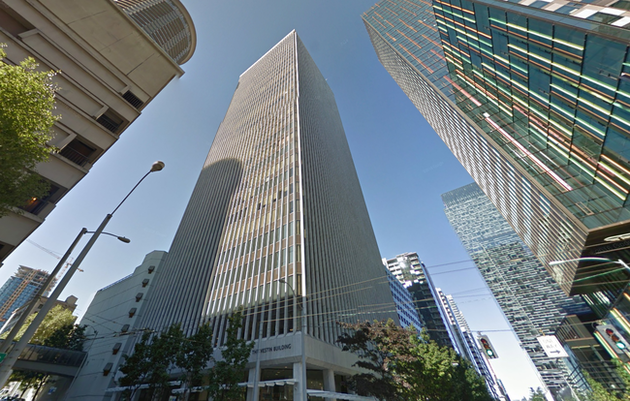
Inside the Westin Building Exchange, 2001 6th Avenue, Seattle
The Westin Building Exchange is one of the most connected buildings in North America. Originally built in 1981 and converted to a carrier hotel, over 70% of its 34 floors are now dedicated to telecommunications and data center operations.
It serves as the Pacific Northwest's primary interconnection point. More than 250 carriers, ISPs, cloud providers, and CDNs operate from this building, making it the densest network hub between San Francisco and Vancouver.
The 19th floor houses a pair of Meet-Me Rooms where carriers cross-connect their networks - nearly 40,000 cross connects run through this building.
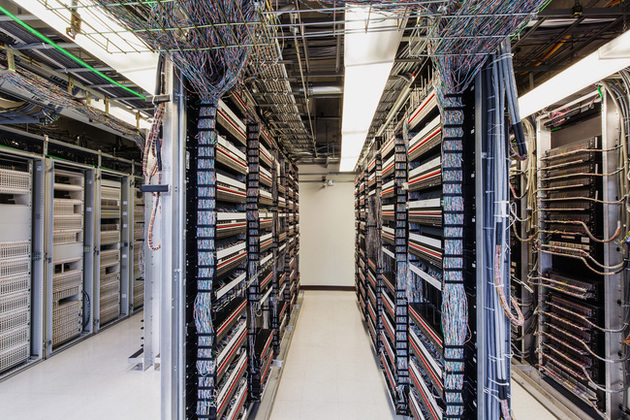
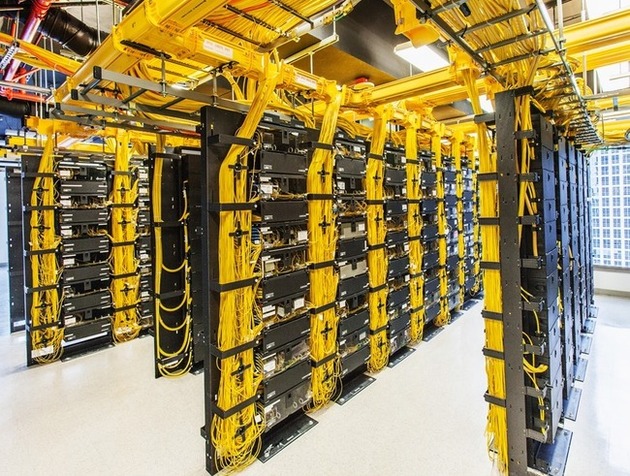
This is where the connections happen. Dense fiber runs, patch panels, and cross-connects link hundreds of networks together. Traffic that would otherwise traverse multiple providers and add latency instead takes a direct path through the exchange.
For your workload, that means fewer hops, lower latency, and more predictable performance. When your server peers directly with Google, Amazon, Cloudflare, and hundreds of regional ISPs, your users notice the difference.
The 19th floor Meet-Me Rooms are where carriers physically interconnect. This is the literal junction point of the Pacific Northwest's internet infrastructure.
Having your server in the same building as the MMR means your traffic doesn't leave the building to reach major networks. That's a real, measurable advantage you can't get from a suburban warehouse datacenter.
The facility runs dual 500 KVA UPS systems in 2N redundancy. 17 diesel generators provide 19.5 MW of backup power capacity with 48+ hours of on-site fuel.
Critical loads get 2N power distribution - two completely independent power paths so a failure in one doesn't take anything down. This is the same level of redundancy that major cloud providers require for their own infrastructure.
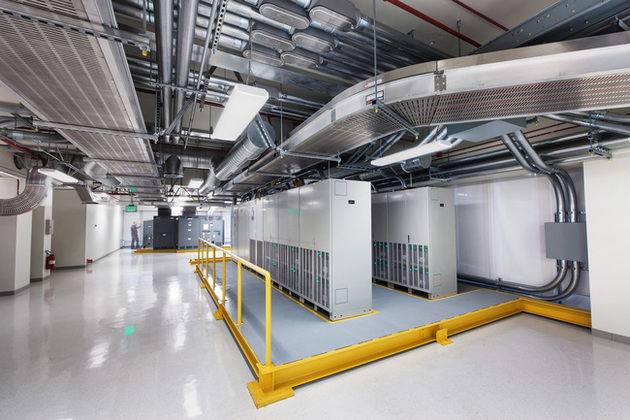
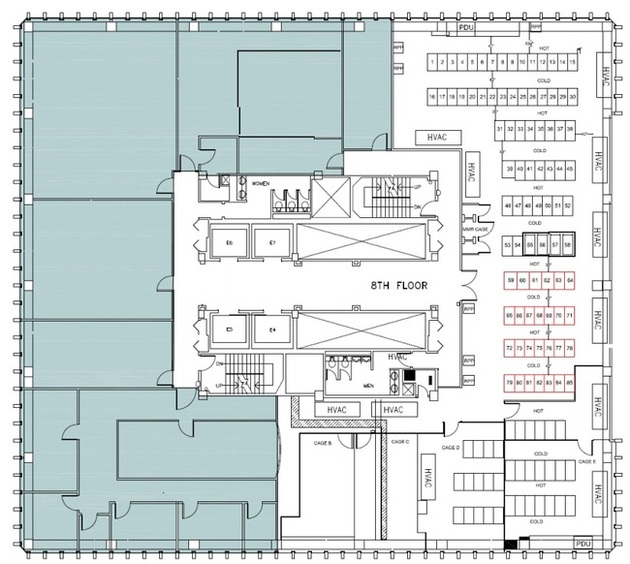
Purpose-built data floors with hot/cold aisle containment, raised flooring for cable management, and precision cooling. N+1 redundant CRAC units maintain consistent temperature and humidity.
Seattle's mild maritime climate gives us a natural advantage for cooling efficiency - we spend less energy fighting heat, which means more reliable operations and lower costs that we pass on to you.
Direct SIX peering and multi-homed transit for fast, reliable connectivity.
Multiple Tier 1 and Tier 2 transit providers with automatic failover and BGP route optimization. No single upstream dependency.
Direct access to the Seattle Internet Exchange with 300+ connected networks. Peer with Google, Amazon, Microsoft, Cloudflare and hundreds more.
Full IPv4 and IPv6 on all services. Dedicated IPv4 addresses and /64 IPv6 allocations included with every server.
Physical and operational security across the facility.